Subscribe to our newsletter
Copyright © 2026 lpcentre.com All Rights Reserved. London Premier Centre For Training Ltd Registered in England and Wales, Company Number: 13694538

version: 3.0.1
Subscribe to our newsletter

Posted On: 5/25/2026, 5:43:21 PM
Last Update: 5/25/2026, 5:43:21 PM
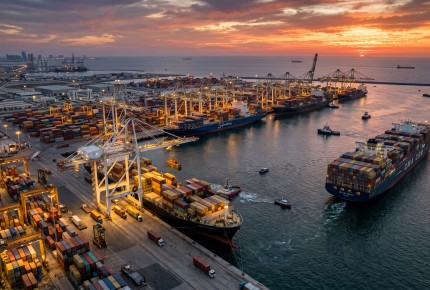
Saudi Arabia has launched a new Red Sea shipping service that connects Jeddah Islamic Port, Salalah in Oman, and the Port of Djibouti, marking another step in the Kingdom's efforts to strengthen its position as a regional logistics hub.
The service, introduced by the Saudi Ports Authority (Mawani), has a carrying capacity of 1,730 TEUs, boosting both import and export movements while strengthening the Kingdom's interaction with regional and worldwide ports.
The project is in line with Saudi Arabia's larger logistics plan under Vision 2030, which seeks to diversify the economy and bolster the Kingdom's position in international trade routes connecting Europe, Asia, and Africa.
Additionally, it expands upon recent infrastructure projects intended to improve supply chain resilience, shipping capacity, and port efficiency throughout the Red Sea region.
The new service comes after Mawani launched the Red Sea Express, a 1,100-container cargo route that connects Jeddah, Yanbu, Ain Sokhna, Egypt, and Aqaba, Jordan. Moreover, these services work together to increase maritime corridors that avoid conventional chokepoints and lessen reliance on risky routes.
Saudi Arabia and other GCC nations have stepped up their competition to become major hubs for trade and transportation.
Given that traditional marine routes in the Gulf are still being disrupted by geopolitical difficulties, Riyadh's latest actions indicate a deliberate shift toward alternative Red Sea paths.
The start of the Jeddah–Salalah–Djibouti service coincides with increased volatility in the region. As tensions between Iran, the US, and their various allies have increased, the Strait of Hormuz, a vital conduit for the world's energy supplies, has been repeatedly disrupted.
Concerned about possible retaliation steps that would jeopardise the Bab al Mandab Strait, another crucial maritime route, Saudi Arabia has reportedly been pressuring Washington to loosen restrictions on Iranian ports and commercial channels.
Likewise, Saudi Arabia turned on its East-West Pipeline to reroute up to 5 million barrels of oil away from the Hormuz route during the height of hostilities earlier this year.
In a similar vein, the UAE redirected flows to serve Red Sea terminals via different pipes. These actions highlight how crucial it is strategically to build robust maritime networks that are resilient to shocks in the region.
The Kingdom's most recent shipping projects take place in the context of growing military and intelligence operations in the Red Sea region. According to reports, the UAE and Israel have strengthened their collaboration in the area, especially on Yemen's strategically important islands like the Socotra Archipelago, where intelligence stations have been set up.
Remarkably, Saudi Arabia continues to play a significant role in the changing security landscape produced by the ongoing conflict and shifting alliances, even though its involvement has been relatively limited.
Despite these challenges, Riyadh keeps pursuing its goals in logistics, using new maritime services to strengthen its position as a major hub for Red Sea trade.
In summary, the Red Sea Express and the Jeddah–Salalah–Djibouti route represent a conscious attempt to future-proof Saudi Arabia's marine connectivity and lessen its susceptibility to geopolitical volatility.