Jobs that AI Can Never Replace — What the Research Really Shows
Jobs that AI Can Never Replace — What the Research Really Shows
14/12/2025
Jobs that AI Can Never Replace — What the Research Really Shows
There’s a lot of noise about automation, artificial intelligence and what the future of employment will look like. People worry about losing their jobs, they watch machines perform tasks once done by teams, and they search for solid guidance about which jobs that AI can never replace.
The phrase itself isn’t hype. It refers to roles where the central value depends on something deeply human—judgement, empathy, creativity, moral reasoning and meaningful interaction with other people. These elements don’t come from software, no matter how advanced it becomes.
When we explore the topic properly, something becomes clear: automation reshapes work, but it doesn’t eliminate the need for roles built on trust, presence and flexible thinking.
Artificial tools excel at repetition. They are efficient with structured tasks and predictable patterns. Yet every advanced system still shows the same limitations. It does not understand emotion. It cannot measure subtle risk the way a person does. It cannot fully read context.
This is why many professions remain secure.
When a role requires persuasion, empathy, negotiation or high-impact decision-making, humans stay at the center.
Even in fast-moving industry sectors, organisations still rely heavily on roles that remain grounded in human judgement.
Many workers assume AI will eventually take every job, but the evidence doesn’t support that idea. There are entire fields where jobs that ai can never replace continue to grow.
Take educators, coaches and trainers. These roles require intuition and connection. They ask for cultural understanding and genuine empathy, the kind that develops through lived experience.
Or look at conflict-management professionals. They navigate tension, personality differences and emotional triggers—situations no robots or automated tool can interpret accurately.
Even customer-facing careers, like healthcare support or counselling, depend on emotional presence more than technical correctness. Machines can offer data. Humans offer reassurance.
These aren’t small differences. They define whether a role feels replaceable or deeply human.
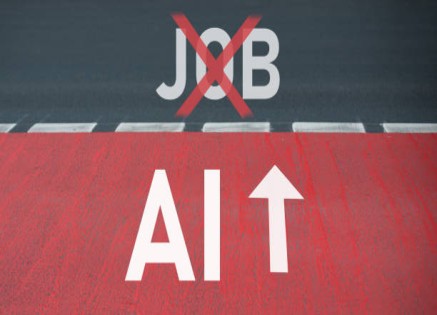
AI can generate content, but it cannot choose meaning. It can suggest ideas, but it cannot evaluate cultural impact or emotional tone.
Creativity requires intention, imagination and reflective thinking—the kind that interprets nuance rather than simply producing it.
Strategy is similar. It involves projection, moral reasoning, complexity and judgement. These are core qualities in jobs that AI can never replace, especially in advisory and organisational roles.
Even in highly technical environments, experts who understand both people and technology are increasingly valuable. They combine innovation with insight, not just data.
Some work simply cannot be automated because society needs a human to take responsibility.
A legal adviser assessing consequences.
A consultant reviewing a difficult decision for companies operating in competitive markets.
An electrician making adjustments in a live system where the slightest error carries severe risk.
These roles illustrate why certain jobs stay outside the reach of full automation.
AI may support the decision, but only a human who took AI training courses in Dubai can stand behind it.
As automation grows, so does the need for oversight. The more AI gets integrated, the more organisations require people who can:
These positions blend technical awareness with sensitivity, accountability and strategic judgement. They sit firmly within jobs that AI can never replace, because a system cannot regulate itself.
Across London, Dubai, Barcelona, Paris, Istanbul, Kuala Lumpur, Singapore and Amsterdam, London Premier Centre Training offers internationally recognised programmes that focus on the skills automation cannot imitate. Each regional office adapts learning pathways to local needs, helping professionals increase their expertise and incomeawareness while building long-term career resilience.
Professionals who thrive today are the ones who explore new tools, take AI courses, learn continuously and build capabilities that complement automation rather than compete with it.
The most valuable skills include:
These abilities are proof that no matter how changing the market is, some things are not easily replaced by machines. They anchor a person’s role in the modern workforce.
The reason is simple: certain jobs do not revolve around task completion alone. They revolve around trust, context, meaning and interpretation.
No automated system can replicate lived experience.
No model fully understands social dynamics.
No machine carries the accountability expected from a human decision-maker.
This is why the conversation about jobs that AI can never replace keeps gaining relevance. People want benefits beyond efficiency. They want guidance, empathy and connection. They rely on human reasoning when decisions affect relationships, wellbeing, justice or safety.
AI with the current expertise and high demand for it, will continue evolving rapidly. The AI's tech landscape is shifting at incredible speed, and automation will reshape millions of roles. But that doesn’t mean humans disappear.
What’s happening is a redistribution of tasks, not the disappearance of people.
Workers who understand both AI and human behaviour become more valuable—not less. They’re the ones who interpret data, guide teams, shape ethical frameworks, make final decisions and communicate meaning clearly.
These are the qualities that define jobs that AI can never replace.
And they remain at the center of future employment.