China Overtakes the United States to Become Germany's Largest Commercial Partner
China Surpasses US in German Trade
24/02/2026
Accounting, Finance & Budgeting
Germany's main economic partner, China, has surpassed the United States, according to data, as Chancellor Friedrich Merz gets ready for his first trip to Beijing since taking office.
The Prime Minister, Li Qiang, will welcome Merz to China on Tuesday with military honours in Beijing on Wednesday.
According to his spokesperson, Sebastian Hille. He will then have dinner with President Xi Jinping for discussions.
Import-Export Dynamics: A Closer Look at German Trade with China
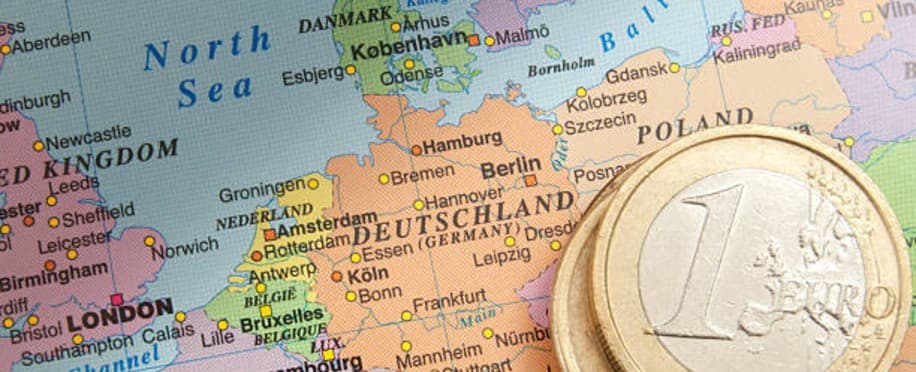
Based on data released by the Federal Statistical Office of Germany on Friday, China regained its position as the nation's most significant market, with €251 billion (£219 billion) in commerce in 2025, up 2.2% from 2024, when the US was the top export destination.
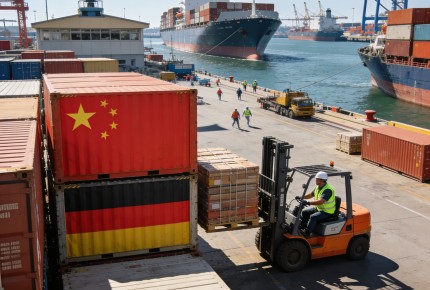
In 2025, German imports from China totalled over €170.6 billion, more than double Germany's exports to China, which totalled €81.3 billion.
Moreover, trade with the United States was worth €240 billion, with Donald Trump's controversial tariffs perhaps contributing to the 5% reduction in trade.
According to Hill, Merz will also visit the German automaker Mercedes-Benz, the Chinese company Unitree Robotics, the turbine producer Siemens Energy, and the Forbidden City during the two-day trip to China. He will also travel to eastern China to see the city of Hangzhou.
Merz's visit is anticipated to cover a wide range of subjects, including trade, human rights, and the conflict in Ukraine.
Dependency of German Automakers on Chinese Markets
With levies on imported electric vehicles implemented in 2024 having little effect on sales and tariffs on steel threatened later this year through steel safeguards, the EU is finding it difficult to curb China's hot manufacturing.
Likewise, Germany and China have a complicated trade relationship since automakers have a significant manufacturing presence in China. Mercedes-Benz and BMW likewise rely largely on sales in the nation for their financial success, and Volkswagen has called it a “second home market.”
Oliver Zipse, the BMW chief executive, is among 30 business leaders joining Merz on a trip to China. He emphasised the necessity of collaboration to address complex global issues, stating that the chancellor's visit signifies a strong commitment to dialogue and cooperation.
EU Strategic Initiatives for Supply Diversification
In an effort to wean itself off China, which controls the majority of rare-earth supply, the EU has launched several initiatives to secure processed and refined critical minerals—including lithium required for EV batteries and permanent magnets used in everything from cars and refrigerators to military jets.
Germany's stance on obstacles to Chinese imports has become less clear-cut due to its desire to protect the auto industry, which is one of the largest employers in the nation.
All in all, in return for promises regarding the vehicle's lowest pricing, it voted against an EU plan to impose tariffs on Chinese EVs in 2024, and this month avoided EU taxes on imports of the Chinese-built Volkswagen Cupra Tavascan SUV.