The EU Proposes 'Buy EU' Industrial Regulations to Counter China
The EU Proposes 'Buy EU' Industrial Regulations to Counter China
08/03/2026
Diplomacy and Public Affairs
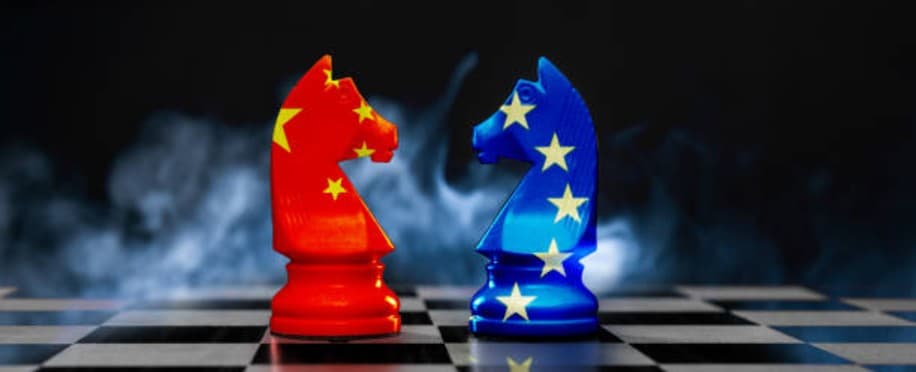
On Wednesday, EU Commissioner Stéphane Léjourné announced a new plan aimed at preventing Beijing from accessing public funding from the EU.
This initiative, termed the “European Preference,” will impose stricter restrictions on China's future investments within the EU and will also exclude China from benefiting from European public funds.
The plan includes measures against countries that implement local content regulations to limit market access, thereby imposing similar restrictions on those nations.
EU Launches 'Made in Europe' Push
The action comes after 200,000 jobs in energy-intensive industries and the automotive sector were eliminated in Europe since 2024, with 600,000 losses in the car industry alone predicted this decade, as China floods Europe with exports while constructing factories that generate very few jobs locally.
Notably, EU Industry Commissioner Stéphane Léjourné introduced the eagerly awaited Industrial Accelerator Act (IAA) of the EU executive. “Facing unprecedented global uncertainty and unfair competition, European industry can count on the provisions of this act to boost demand and guarantee resilient supply chains in strategic sectors,” he said.
Clean technologies, automakers, and energy-intensive industries like steel, cement, and aluminium are the three strategic sectors that the strategy focuses on.
Meanwhile, it establishes 'Made in Europe' standards, such as a 70% EU-content requirement for electric vehicles (with notable exceptions for the majority of battery components), 25% for aluminium, and 25% for cement.
“It will create jobs by directing taxpayers’ money to European production, decreasing our dependencies and enhancing our economic security and sovereignty,” Séjourné stated.
Stricter Investment Regulations Aimed at China
Since the IAA's establishment, member states and Commission departments have engaged in intense internal conflict.
While Germany has pushed to expand the 'Made in Europe' label to include products and components from like-minded partners, a group of Nordic and Baltic nations cautioned that the new regulations could hinder investment and restrict EU countries' access to foreign technologies. France, on the other hand, has adopted a more protectionist stance.
Ultimately, the Commission has suggested granting EU-origin status to goods originating from trading partners with reciprocity-based free trade agreements, particularly in public procurement contracts.
A Commission official stated, “We will consider union-origin products that are manufactured in third countries with which we have an international commitment.”
This leaves out the US and China, which have no such agreements with the bloc, but it may also leave out more like-minded allies like Canada, where EU businesses may soon be subject to a Buy Canadian policy.
The EU official continued, “The proposal also states that we will check later if these countries are not open to us on the same list of categories of technologies, even when they were supposed to.”
Foreign direct investment exceeding €100 million in batteries, electric cars, solar panels, and essential raw materials will also be subject to new requirements, with China once more being the main target.
Further, another EU official explained the Commission's decision to limit access to its market by saying, “They basically come on a piece of European land, build their factories, come with thousands of Chinese workers and run the factory on their own with little local added value.”
EU Attempts to Tighten Foreign Investment Rules
New regulations mandate that if an investor comes from a country with 40% global market share in a sector, 50% of operations must involve EU workers. Additional conditions include foreign ownership capped at 49%, joint ventures with European firms, a requirement for technology transfers, 1% of global revenue dedicated to EU R&D, and 30% of production to occur within the EU.
According to the same EU official, Europe should function as a factory rather than a supermarket. The proposal awaits approval from the European Parliament and the Council of the EU, representing member states.
Read more news:
- The Escalating Iran Conflict & Its Global Shockwaves on Energy Markets
- London Premier Centre Participates in the Headteacher Wellbeing Conference
- China Overtakes the United States to Become Germany's Largest Commercial Partner