NASA Tests Cutting-Edge Drone Technology for Flights over Mars in Death Valley
NASA Tests Cutting-Edge Drone Technology for Flights over Mars in Death Valley
05/12/2025
Artificial Intelligence (AI)
NASA has funded 25 technologies for Mars exploration, including novel drone flight software. Engineers replicate Mars-like conditions technologies in California's Death Valley and the Mojave Desert, using three drones to improve navigation software in arid scenarios.
Remarkably, Extended Robust Aerial Autonomy is part of NASA's Mars Exploration Programme and focuses on improving navigation for the Ingenuity Mars Helicopter, especially after challenges encountered during its 72nd and final flight due to Martian dunes.
Ingenuity Drone: Designed for Diverse Terrains
Ingenuity, designed for well-textured terrain, faced challenges crossing blander areas, as noted by JPL researcher Roland Brockers. Future vehicles aim for greater versatility to navigate difficult landscapes like dunes without concern.
Moreover, the Mars Exploration Programme is developing various technologies, including navigation software, robotic scouts, and long-distance gliders, aimed at enabling robots to autonomously explore Mars or assist astronauts in their tasks.
Notably, NASA has conducted research in Death Valley National Park since the 1970s, originally for the twin Viking spacecraft's Mars landings. An area known as Mars Hill was significant for this research. Nearly fifty years later, JPL engineers tested the Perseverance rover's precision landing system using a piloted helicopter in the park.
Algorithms for Safe Landing in Complex Landscape
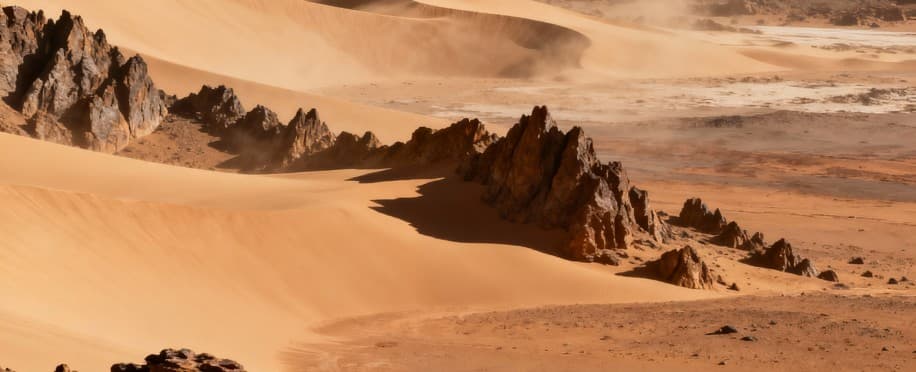
Engineers conducted drone testing in Death Valley's Mars Hill and Mesquite Flats Sand Dunes under high temperatures up to 113 °F (45 °C), achieving a rare licence for research flights. The team observed significant findings regarding camera filters for ground tracking and algorithms for safe drone landings in complex terrain.
According to National Park Superintendent Mike Reynolds, scientists are utilising Death Valley for space exploration research, highlighting its role as a living laboratory that enhances our understanding of desert environments and extraterrestrial worlds.
During a three-day excursion, the team tested mobility systems at Dumont Dunes in the Mojave Desert, a site previously used for NASA's Curiosity rover tests in 2012. The dunes provided varied terrain, unlike the featureless landscape of Death Valley, where flight software was originally tested.
Further, as highlighted by JPL’s Nathan Williams, field tests provide a broader perspective than computer models and satellite images. He emphasises the need to explore challenging terrains, as scientifically interesting features are often found in less accessible areas.
Robot Dogs
The California desert and New Mexico’s White Sands National Park have both served as testing sites for Mars technology, with NASA researchers conducting tests in August at the latter location.
Meanwhile, they used a doglike robot named LASSIE-M (Legged Autonomous Surface Science in Analogue Environments for Mars) to measure the physical properties of the surface. This data allows LASSIE-M to adjust its gait when encountering various terrains, which may indicate scientifically significant changes.
The team aims to create a robot capable of traversing rocky and sandy terrain, which poses risks to rovers, while scouting for new scientific discoveries ahead of humans and robots.
Aiming for Mars
NASA's Langley Research Centre has developed the Mars Electric Reusable Flyer (MERF), an autonomous robot designed for Mars exploration. This design prioritises range over compactness, utilising a single wing with twin propellers for vertical takeoff and high-speed flight, allowing it to map the planet's surface from the air.
Furthermore, the MERF, when fully deployed, is approximately the length of a small school bus. Engineers at Langley have been testing a half-scale prototype to examine its aerodynamics and lightweight materials, crucial for operation in Mars' thin atmosphere.
Progressively, NASA is exploring new ways to investigate Mars through projects centered on innovative power generation, drilling and sampling tools, and advanced autonomous software.