Tesla and SpaceX Announce $25 Billion 'Terafab' Semiconductor Facility
Tesla and SpaceX Announce $25 Billion 'Terafab' Semiconductor Facility
24/03/2026
Artificial Intelligence (AI)
Together, SpaceX and Tesla have unveiled 'Terafab,' a $25 billion semiconductor manufacturing facility in Austin, Texas, which Elon Musk calls an unprecedented advancement in chip manufacturing.
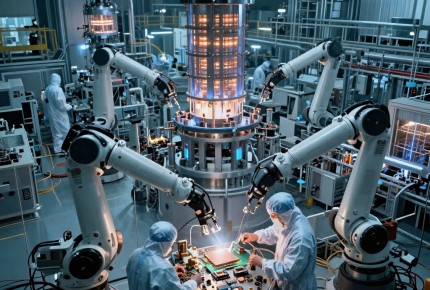
The facility, which is located at Tesla's Giga Texas North Campus, is designed to combine all phases of chip development into one location, including design, lithography, fabrication, memory production, packaging, and testing.
According to Musk, Terafab will eventually produce one terawatt of processing power each year, which is significantly more than any current semiconductor operation.
Aspiring Technical Goals and Production Volume
The businesses seek to make semiconductors utilising 2-nanometre manufacturing technology, the most advanced node currently available for commercial use. Achieving this would put Terafab in direct rivalry with industry heavyweights such as TSMC, which has invested decades and billions of dollars to achieve comparable capabilities.
Moreover, the facility's expected production is as impressive: 100,000 wafer starts per month initially, increasing to 1 million at full capacity. That top aim would account for nearly 70% of TSMC's global production, with a single factory run by enterprises with no prior semiconductor fabrication experience.
Musk claims Terafab will generate 100-200 billion AI and memory chips per year to enable Tesla's Full Self Driving system, Cybercab robotaxi fleet, and Optimus humanoid robot. He also anticipates millions of Optimus robots helping to build and operate the fab.
Likewise, Musk contends that existing suppliers like Samsung, TSMC, and Micron cannot expand quickly enough to satisfy Tesla's demands, arguing that current global chip output is only a tenth of what his firms require.
Dual Chip Production and Ambitious Space Computing Vision
Terafab will focus on two chip families: inference processors for Tesla automobiles and robots, and D3 chips for AI-powered orbiting satellites. Limited manufacture of Tesla's next-generation AI5 microprocessor is slated for 2026, with volume production planned for 2027, although previous delays raise concerns about practicality.
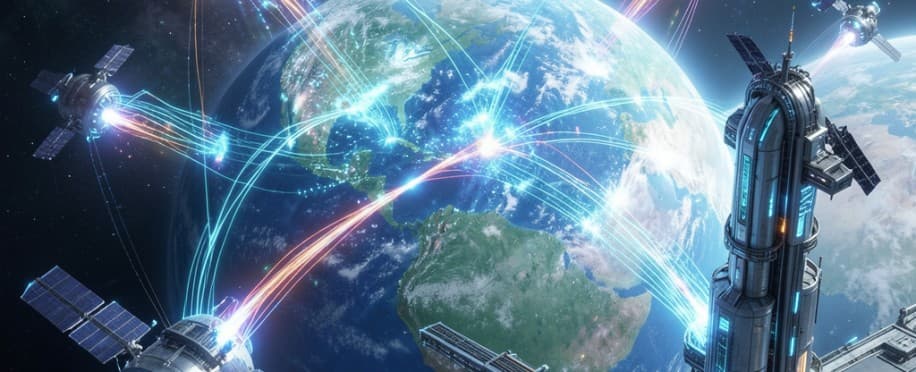
Notably, Musk's promise to allocate 80% of Terafab's compute output to space-based AI systems is the most out-of-the-ordinary aspect of the announcement. He claims that increased solar irradiation and effective heat dissipation in space could make orbital computing cheaper than terrestrial data centres in a few years. This vision, he claims, is part of the creation of a “galactic civilisation.”
Financial Uncertainty and Historical Background
Terafab's anticipated $20–25 billion total cost has not yet been factored into Tesla's already record-breaking 2026 capital spending plan, according to the company's CFO. Critics point out that Musk has previously made such expansive claims, most notably at Tesla's 2020 Battery Day, when he predicted significant advancements in the production of 4680 cells. Only a small portion of those goals have been met by Tesla five years later, and the technology has seen numerous delays and redesigns.
Strategic Motives and Scepticism
The Terafab announcement, according to analysts, seems to be motivated more by strategic positioning than operational preparedness. Global sales of Tesla's automobile division are dropping, while SpaceX is getting ready for a huge initial public offering.
In short, connecting both businesses to the surge in AI infrastructure could improve investor mood. However, the space-based compute design is generally seen by experts as unfeasible, and the project as a whole is seen as an overreach reminiscent of previous unmet promises.
Read more news:
- Generation Z's Job Hunt Has a New Player: Mom & Dad
- Global Investors Pledge Almost $3 Billion to King Salman Park, a Saudi Giga-Project
- The EU Proposes 'Buy EU' Industrial Regulations to Counter China