SpaceX Launches 29 More Starlink Satellites, Setting a Record for Rocket Reusability with the Falcon-9 Booster
SpaceX Launches 29 More Starlink Satellites, Setting a Record for Rocket Reusability with the Falcon-9 Booster
13/12/2025
IT and Computer Science
A successful operation on Monday night resulted in a record 32 launches and landings for a SpaceX Falcon 9.
At 5:26 p.m. ET, the Falcon 9 first-stage booster, designated as B1067, took off from NASA's Kennedy Space Center in Florida's Launch Complex 39A (LC-39A).
Falcon 9's Remarkable Launch
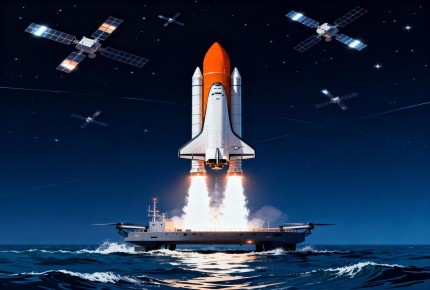
The Falcon 9's first stage returned to Earth shortly after launching 29 Starlink internet satellites into low-Earth orbit. It made a flawless landing on the 'Just Read the Instructions' drone, which was positioned in the Atlantic Ocean off the coast of Florida.
Moreover, CRS-22, Crew-3, Turksat 5B, Crew-4, CRS-25, Eutelsat HOTBIRD 13G, SES O3B mPOWER-A, PSN SATRIA, Telkomsat Merah Putih 2, Galileo L13, Koreasat-6A, and 20 Starlink flights were all previously launched by it.
An increasing number of SpaceX boosters are operating multiple flights. The core of the spaceflight company's approach is the reusability technology, which allows it to significantly reduce launch costs in comparison to conventional rockets that have a single use.
Additionally, SpaceX has successfully landed the first stage of their considerably larger and more powerful Starship rocket, using the lessons learnt from the Falcon 9 landings. However, in this instance, the booster is secured just above the ground by two enormous mechanical arms.
SpaceX's Breakthrough Achievement
SpaceX's achievement of landing an orbital-class rocket upright minutes after launch has only been duplicated by Blue Origin. After an unsuccessful effort at the beginning of the year, the American business founded by Jeff Bezos, the founder of Amazon, just last month successfully landed the first stage of its New Glenn rocket.
After all, others aspire to be in the exclusive group, but mastering the technology is difficult. For instance, the Chinese company LandSpace recently tried to land the first stage of their reusable Zhuque 3 rocket, but instead of landing safely, the booster burst upon return.
Read more news:
- NASA Tests Cutting-Edge Drone Technology for Flights over Mars in Death Valley
- OpenAI will Discontinue API Access to Chatgpt-4o-Latest in February 2026
- The US Removes the Restrictions on AI as Europe Loosens Them